Sunday, December 12, 2010

Longanisa Nigiri Sushi

Counting down to the production of Eating with Lola at the Next Stage Festival in January, I shall share some of my Lola Pinang's recipes with my own twist. An expert at making gourmet food with ghetto resources, these recipes will be kind to your wallet, but brutal on your waistline. So get your cupboards open, loosen your belts, and get cooking.

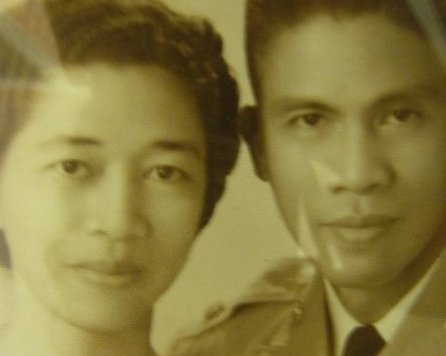
In Eating with Lola, Lola tells the story of her husband who was tortured by the Japanese at Manila's Fort Santiago during World War II. The puppet that depicts the Japanese soldiers stationed at the fort is a pair of red scissors. This was completely intentional and reflective of the attitude most elderly Filipinos have towards the Japanese. Nursing wounds kept fresh by memories of rape, torture and death, thoughts of the Japanese Occupation of the Philippines are not often met with nostalgia. The scissors are red representing blood (not to mention the Japanese flag) and sharp, much like the soldiers' bayonets of the period.

This recipe, to me, is a culinary burying of the hatchet. A gastronomic peacemaking between the two nations. Nothing like eating to build bridges between cultures. Enjoy.

INGREDIENTS

1 cup cooked sushi rice
2 tablespoons datung puti white Filipino vinegar
2 longanisa sausages, boiled then fried until caramalized (I prefer Baguio sweet longanisa. Use your favourite), then chiffonade the sausages into long pieces.
1/4 diced tomato
3 tablespoons low sodium soy sauce
1 tablespoon lime or calamansi juice
lime or calamansi zest to garnish

mix warm sushi rice with 1/2 the vinegar and put aside to cool.

take a tablespoon full of rice and mold into a small oval. place onto plate.

along the length of it, place 1 cube of the diced tomato, 1 long chiffonade piece of the longanisa, and garnish with the zest.

in a bowl take the lime/calamansi juice, soy sauce and the rest of the vinegar and whisk together. Pour atop the sushi or use as a dipping sauce with wasabe.

yields 4 pieces.

Monday, October 18, 2010

Lola's Meatloaf

Counting down to the production of Eating with Lola at the Next Stage Festival in January, I shall share some of my Lola Pinang's recipes with my own twist.
An expert at making gourmet food with ghetto resources, these recipes will be kind to your wallet, but brutal on your waistline.

So get your cupboards open, loosen your belts, and get cooking.

Lola's Meatloaf

This recipe utilizes the typical food rations given to Filipinos by American army bases during World War II: canned meat and ketchup. Don't dismiss this as humble pie, though. It is worthy of any dinner party.

Ingredients:

2 lbs ground pork. Hands off the low fat stuff. You need lots of drippings for the gravy.
4 eggs
10 strips of smoked bacon
1 can of SPAM or pate
1 teaspoon of salt and pepper
3 teaspoons of soy sauce
1/2 cup of ketchup
1/2 a cup of corn starch mixture

Preheat the oven to 350 degrees

Hard boil 3 out of the 4 eggs.

While the eggs are boiling, line a narrow casserole dish with foil.

Place 5 of the bacon strips along the bottom of the dish, width-wise.

In a bowl, hand-mix the last egg, the ground pork, the canned meat of your choice (remember that Lola -- both in the play and in real life-- would have found anything in the cupboard), salt and pepper and 1 teaspoon of the soy sauce, together until well blended.

Spread 1/3 the mixture on top of the first layer of bacon.

Take the hard boiled eggs and place them lengthwise atop the pork.

Take the rest of the pork mixture and place on top of the eggs.

Place the remaining strips of bacon on top of the loaf, width-wise.

Using the foil, start to mould a loaf. Once the loaf is formed, bound the foil together and place the loaf in its casserole dish into the oven and bake for 1hour until meat is cooked.

You will notice a crapload of drippings. Do not feel guilty for eating this. A pig isn't good for anything until it's dead and tomorrow you can walk it off. For now, you must love yourself enough to eat this.

Pore the drippings into a saucepan. Put it on medium heat. Let it simmer.

Add the ketchup and the remaining soy sauce. Whisk well.

Add the cornstarch/water mixture to create a gravy. Whisk well.

Slice the cooked meatloaf in 1 inch slices and serve with steamed rice and the gravy.

Eat with a fork and spoon.

Wednesday, September 8, 2010

Lola Unplugged


Some good news: Eating with Lola will be showcased at the Next Stage Festival in January 2011.

Bad news: I can not, I must not, go onstage with a puppet I bought in a store.

Don't get me wrong, though. I do love Lola 1.0 very much. You might not think so considering how I've sewn her mouth shut, sliced the back of her neck and stuffed her into a wire basket en route to rehearsals at fu-GEN.

Now, armed with some tips from my director, Ann Powell of the Puppetmongers and an assortment of knick-knacks from Walmart crafts section, I am ready to produce Lola 2.0.

Some changes:

*As per Theatre Passe Muraille's AD, Andy McKim's suggestion, I chose eyes that weren't too wide and starry. I've opted for ones that are beady to make you question how well Lola can see.


*She now has a severe under bite. I always pictured her like this in my head. This will change the way she speaks now. Since she suffers from a stroke in the play, this may be due to facial paralysis.

*As per Ann Powell's suggestion, I have taken all stuffing out of her arms so that she can be more flexible. She just has beads as weights in her palms and a joint in her elbow.

Let's see how she works.

Thanks to my partner, Pavey, for helping me with the sewing ideas and cheering me (the anti-Martha Stewart) on. Phew!

Wednesday, August 11, 2010

Pancakes, the Miracle Worker

No really. My dog, Pancakes, is a miracle worker.

He may have peed on your bra. Yes, he may have been the canine who fertilized your flowers. He might be the reason why the last half of your pot roast is missing. But you will love him.

You may in fact think that his overt friendliness is yours alone. That he loves you most. You might mention to others how Pancakes jumps up next to you, places his palms on your lap and looks into your eyes the minute you share the same space. You may even tell Pancakes, “Okay, enough, boy. Time to show your affection elsewhere. I can’t be the only human around,” when in fact you wish deep down inside that you are the best thing on two legs this dog will ever love.

This simply isn’t so. Take someone fresh out of Kingston Penn, give him a plate of bacon and you can watch this pooch deny you were ever alive. That is, until you get your own plate of bacon.

He is a testament to the beauty of saving abused animals. Born in a litter of pure bred American Cocker Spaniels, he was bought by a family who quickly kicked, starved and humiliated the pedigree right out of him. That’s why he’s gorgeous but knows little more than to give a high five, sit, and fetch.

What he does not have in show, he makes up for in his ability to heal and love.

This I understood the minute I became his second mama. When my partner, Laura, introduced me to this kind soul, I had never had a dog before due to dangerous allergies. For some reason, or by the grace of god, I wasn’t allergic to Pancakes. So I cared for him, and I continue to care for him, not taking for granted anything that comes with dog ownership. I also have the pleasure of loving this dog with an adult wisdom and artist’s eyes.

This is when I began to observe a peculiar pattern.

Each time I took the little guy out, someone, somewhere would stop in their tracks to pet him. And I don’t mean a “Look at this wittle puppy! You’re cute! Yes you are” kind of petting. I mean, mournful, bittersweet moments on the sidewalk.

“Can I pet your dog?” said an elderly woman on the bus one day. I had never heard this before as I had never had a dog. What do people do in this situation? Is it as inappropriate a statement as “Can I pet your bosom?” I decided to let her shaky hands peruse the wavy fur.

“Is it a cocker spaniel?” I nodded yes and the woman’s eyes began to well up.

“I just put my 13 year old female cocker spaniel down,” she said as her simple petting turned into a full embrace of Pancakes. He let her as if to say, “There, there.”

Even though I had told her Pancakes is a boy, she kept saying through her tears, “You’re a good girl. Yes. You are a good, good little girl.” Again, Pancakes let her as if to say, “I will be whoever you want me to be. As long as you have bacon.”

This continued. One man saw Pancakes and remembered the dog he lost during his turbulent divorce. The kids were brats, so he didn’t mind losing them. But the dog. The dog...

One woman remembered the exact date of her cocker spaniel’s death when she was a child. She has never recovered. This was usual among all of our encounters: They remembered the date of their dog’s death, they remember the dog to be the “best motherfucking dog on earth. No other dog has ever compared.”

The most poignant of these stories has to be when Pancakes jumped into the lap of a middle aged man.

I could feel another story coming on as this guy, with his salt and pepper hair, began to pet Pancakes slowly, pensively.

“I had a dog like this when I was a kid,” he began. “I watched him die. He was on a dock and a fishing line strangled him in front of me.”

Laura and I were aghast. We thought he would, I don’t know...tell us about how his cocker blew out his birthday candles and left the cake covered in slobber. Or how his cocker licked his face when he had a fever. Jeez.

“That’s why I became a veterinarian. I decided that because I never saved him, I wanted to save dogs for the rest of my life.”

Cue nose blowing and tear duct dabbing.

Pancakes remained in this man's lap for a long time. And the dude didn't even have a plate of bacon.

Photo credit: Laura Pavey.

This image will be on the cover of his book entitled "Can I eat what you're eating? An American Cocker Tells All"

Tuesday, May 18, 2010

Sulong gets Schooled


While being interviewed in the sun at the Big Carrot Juice Bar, I realized this is one of many times academics have gotten in touch with me.

This time, it was the lovely Ryerson grad student, Parvin Vahdat, whose thesis involves the role of media and art in policy building around Live-In Caregivers. While sipping juice we discussed audience reactions to Future Folk and how I thought the play could move audience members towards changing their views on migrant work.

The first time academics caught onto our work was through George Brown College's Labour Fair, where we performed a 10 minute excerpt of Future Folk. Word spread like wild fire from then on when Shasha Nakai asked if she could film the presentation for the Ryerson student documentary, Baby Not Mine. It went on to win the Best Documentary at the Canadian Student Documentary awards.

More recently, Wilfred Laurier University Professor of English Eleanor Ty presented her paper on the Past As Affect in my play Singkil at the fu-GEN Asian Canadian theatre conference earlier this month.

Since then, as well as the presentation of my one-woman puppet show, Eating with Lola, I have been blessed with the interest of even more academics who would like to see the work in their schools.

I mention all of this because I am realizing the power of education in the distribution of our work as theatre artists. Of course I knew it somewhat before. But only now am I realizing that the interest of academics in theatre helps the work live beyond the curtain call and helps the message connect with people long after our fleeting runs.

Images: Above, Eleanor Ty at the fu-GEN Asian Canadian Theatre Conference; Below, Parvin Vahdat during our interview.

Wednesday, May 12, 2010

Full Circle


I stood downstage delivering my final monologue of Future Folk in which my character, Luz, is reunited with her three children. For Luz, it had been 7 years since she had seen her kids and one of her children, the youngest, does not recognize her. It's one of the many harsh realities lived by Filipino domestic workers around the world.

"No, I'm not your Tita," says Luz to the doubtful child. "I'm your mommy."

At that moment, the audience, mainly comprised of Filipina caregivers, began sobbing. One woman covered her face as if she was watching a horror movie, but instead of a slasher scene, it was her worst nightmare come alive onstage.

After this performance -- a free one scheduled by Theatre Passe Muraille and Sulong Theatre specifically for Filipino caregivers -- one woman approached me and told me that she hopes and prays that her daughter will recognize her when they are finally reunited.

It was a dream for me: To perform Future Folk with my dear colleagues Karen Ancheta and Aura Carcueva, for these women who have given so much of their time and stories to make our production a reality. It seems like a million years ago that I felt like it was going to fail.

You see, before Future Folk was a full length play about the lives of caregivers told through Filipino folk arts, I thought researching it was going to be a breeze. I would simply book time at the Kapisanan Centre, bring food and over the course of one Sunday, we would interview 10-30 caregivers. Yeah...no. That never happened. We could never get these women to convene because their one day off -- usually Sunday -- was often taken away from them at the last minute by their employers. I would receive phone calls from teary-eyed women saying they had to reschedule but weren't sure when.

I had to meet with them one at a time, over the course of a couple of years, to get this play's research in order. It was a triumph of baby steps, a puzzle put together with very tiny pieces.

Standing there before these women, these strong women, to tell their stories, made me realize how far we had come...and how much further we must go.

Our biggest win was when Ate Pinky, who contributed a great deal to our research was later interviewed by CBC Radio after seeing Future Folk said, "It was like it was my voice but in someone else's body."

Tuesday, May 11, 2010

Eating with Puppets


Eating with Lola began as an obituary.

After the death of my Lola Pacing last year, I took it upon myself, as her granddaughter, to write her obituary. Typical of most children of migrant Filipinos, I had only seen my Lola four times when I had the chance to visit Manila and in those fleeting moments, she still was a mystery.

So when I began putting pen to paper, I decided to actually ask questions about her remarkable life.

The play was borne out of the fantasy of being given the chance to actually be my Lola's grandchild. Be in the room with her. Be beside her and nurse her. No geographical challenges. A simple origami fold between Toronto and Manila, the turning back of time and there I was by her bedside listening to her voice.

I then began stitching together the story of Lola, who, over the course of her very last meal on earth, recounts her life's experience making food. And while this is unfolding, her granddaughter, Grace, is given the challenge of feeding her something the finicky Lola actually wants to eat.

It became a final lullaby to the living. It became a meal for the dead.

It was magical making the play come to fruition -- but even magic demands its own fare share of sweat.

I remember typing the words "The End" on my first draft, thinking I could then stage it. Not so. I realized that it was a glorious failure. I had to stage it then write down the culmination of my improvisations. This took several months.

Then, thanks to the fu-GEN Potluck Festival, I was mentored by Ann Powell of the Puppetmongers. Her solution? Forget the script. Start with storyboards and then commit the staging, words and the ever-growing props list, to paper.

I never got around to story boarding. But improvising the scenes allowed the story to come alive through the puppet, not despite the puppet.

I performed the play at the Potluck Festival to many teary eyes. It was so satisfying to perform it confidently with all of the tools Ann had given me.

I can't wait to perform it again.